
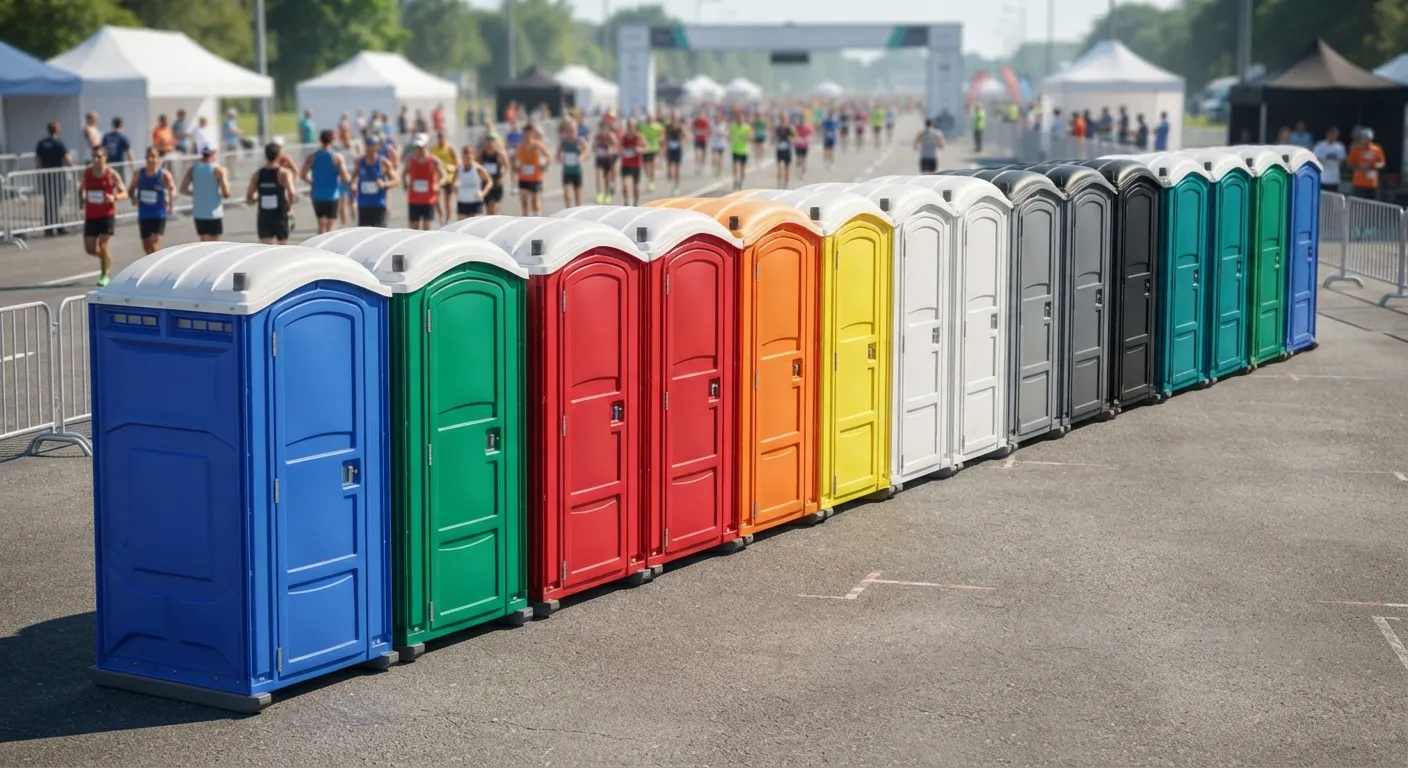
How many restrooms does a Melbourne race need?
Start with the runner count and split it three ways: start chute, aid stations, finish line. OSHA portable toilet requirements sets construction site ratios under 1926.51(c), and while a road race isn't a construction site, race directors use the same logic: figure one toilet for roughly every 200 to 250 participants, then add extra at the finish, where people cluster and wait. A half marathon through Melbourne pulling 1,500 runners generally calls for 8 to 10 standard porta potty rentals, staged at mile 1, mile 6, and the finish festival. Spectators count too. If families are gathering along the course, add units near viewing areas rather than making everyone walk back to a single bank, following the same logic laid out in the porta potty placement guide.
ADA Standards section 213.2 requires that at least 5 percent of any cluster of single-user units be accessible, with a minimum of one no matter how small the cluster. That means even a compact 4-unit bank at a 10K start needs one ADA accessible porta potty with a 32 inch clear door opening per ADA Standards section 404.2.3, and a 60 inch turning circle inside per section 304.3.1. Races that skip this step usually find out during the pre-race walkthrough, not before, which is why the ADA restroom requirements page is worth a read before finalizing counts. For events expecting heavy foot traffic, a restroom trailer rental at the finish line handles volume better than a bank of standalone units and gives runners a real door and sink.
Melbourne Porta Pros builds these layouts around the course map, not a flat headcount, using the same approach covered in how many porta potties do I need. A point-to-point marathon needs restrooms at points spectators can't easily reach on foot, which changes where units go compared to a looped 5K that finishes where it starts.
What does a race weekend restroom rental cost?
Pricing depends on unit type, count, and how long units sit on site before and after the event. Most race organizers book a weekend block rather than a single day, since setup happens Friday and teardown follows Monday, a pattern also common for wedding restroom rental and festival restroom rental bookings.
| unit | duration | typical price |
|---|---|---|
| standard | weekend | $250 |
| standard | event | $400 |
| ada | weekend | $240 |
| deluxe | week | $250 |
| delivery_fee | weekend | $200 |
A standard unit weekend rate is measured around $250, while a full event-day rate on a standard unit runs closer to $400 for larger single-day gatherings. Add a delivery fee, typically around $200 for weekend jobs, since race sites often need multiple drop points instead of one central delivery. Races wanting fewer plastic units and more comfort sometimes upgrade a portion of the order to deluxe flushable porta potty units near VIP or sponsor tents. For full unit comparisons across event types, see porta potty rental cost and porta potty rental per day if a smaller shakeout run needs a single day of coverage instead of a full weekend, and check monthly porta potty rental rates for a race series running across a full season.
Courses that also need barrier control at intersections or the finish chute can add temporary fence rental or crowd control barrier rental to the same delivery, which keeps runners, restrooms, and spectators separated along tight Melbourne street sections.
How to brace a temporary power pole for race timing equipment?
Timing mats, finish arches, and PA systems along a Melbourne race course usually run off a temporary power pole rather than a generator at every station, especially where the course crosses areas without easy generator access. Bracing that pole correctly matters more on race day than most organizers expect, because a pole knocked loose mid-race can drop timing data at the exact moment lead runners cross.
A power pole needs a stable base plate and guy wires or a braced frame rated for the local wind load, set on ground that's been checked for underground lines before the spike goes in. OSHA 1926.404(b)(1)(ii) requires ground fault circuit interrupter protection on temporary construction power, and race timing setups running off a pole should follow the same GFCI standard even though a road race isn't a construction site. Keep the base clear of the runner lane by at least the same clearance used for barricades under OSHA 1926.202, which calls for barricades conforming to ANSI D6.1 near active work or crowd areas. If lighting is needed at a pre-dawn start line, a light tower rental mounted separately from the timing pole avoids overloading one circuit, and organizers can review the full porta potty rental checklist to confirm nothing gets missed before gates open.
Races staged out of Melbourne sometimes stage restrooms and power together at a single hub near the finish, coordinating with construction site services crews already working nearby for shared delivery windows.
How far in advance should we book race restrooms in Melbourne?
Book 4 to 6 weeks out for anything over 500 runners. Popular race weekends fill delivery slots fast, and courses needing units at multiple mile markers take longer to route than a single-location event.
Do we need handwashing stations separate from the restrooms?
Yes, especially at aid stations handling food or gels. A handwashing station rental near fuel tables keeps hands clean without tying up restroom lines, and 29 CFR 1910.141(d)(2) requires soap and towels, not sanitizer alone; a portable sink rental works well as a second option at busy aid stations.
Can restrooms be placed along the course, not just at start and finish?
Yes, and they should be for anything longer than a 10K. Placing units near mile 3 or mile 6 cuts backtracking and keeps the finish line bank from overloading right as runners come through.
What size unit works best for a finish line festival?
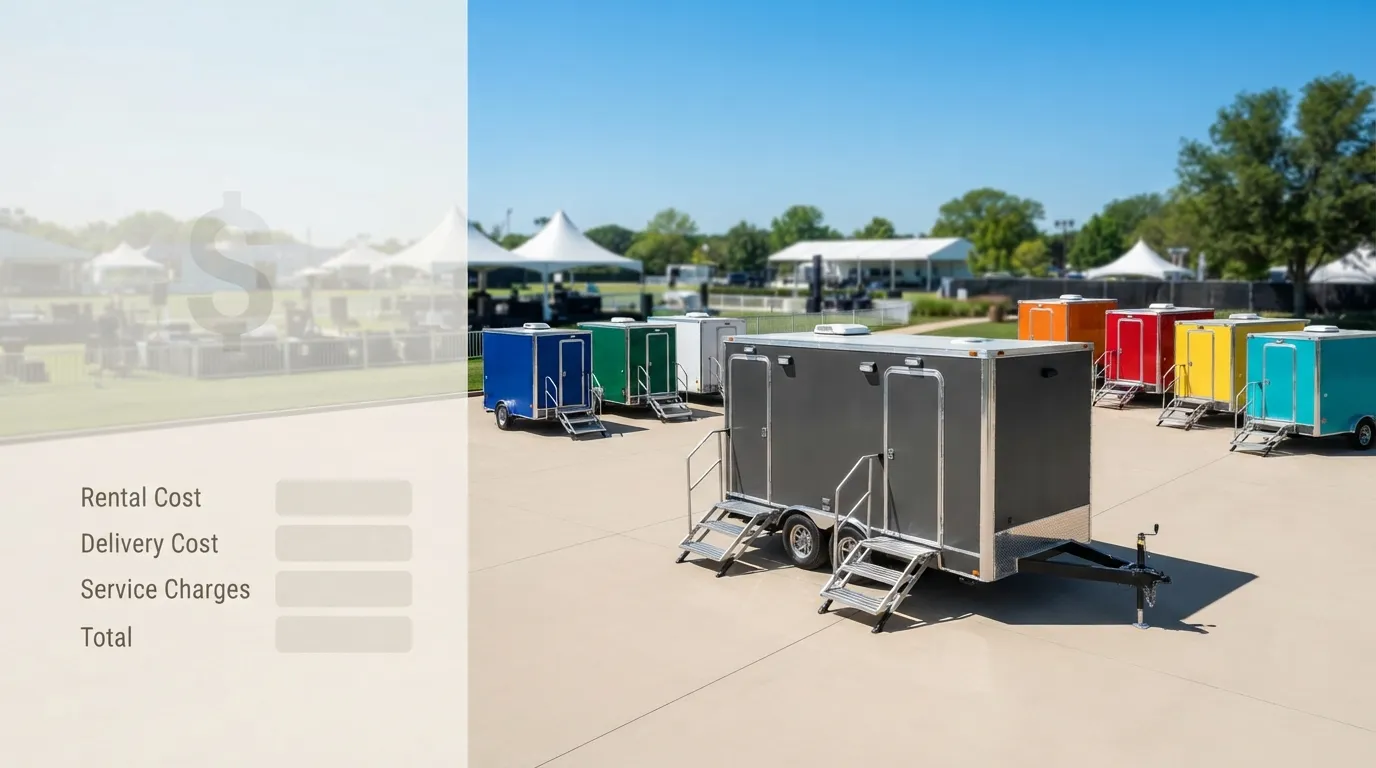
An 8 stall or 4 stall trailer handles festival crowds better than stacking standard units. See 8 stall restroom trailer or 4 stall restroom trailer for layouts sized to expected finish-line crowd size.
Do you deliver to towns near Melbourne for regional race series?
Yes. Courses running through West Melbourne, about 5.7 miles south, or up toward Indian Harbour Beach, roughly 6.9 miles northeast, get the same delivery and pickup scheduling as races staged inside Melbourne proper, and the full list of towns covered sits on the service areas page.
Next step
Get a delivery date
Tell us the address, the dates and the headcount. We size the order and confirm the route.