
What Does a Melbourne Construction Site Need for Sanitation?
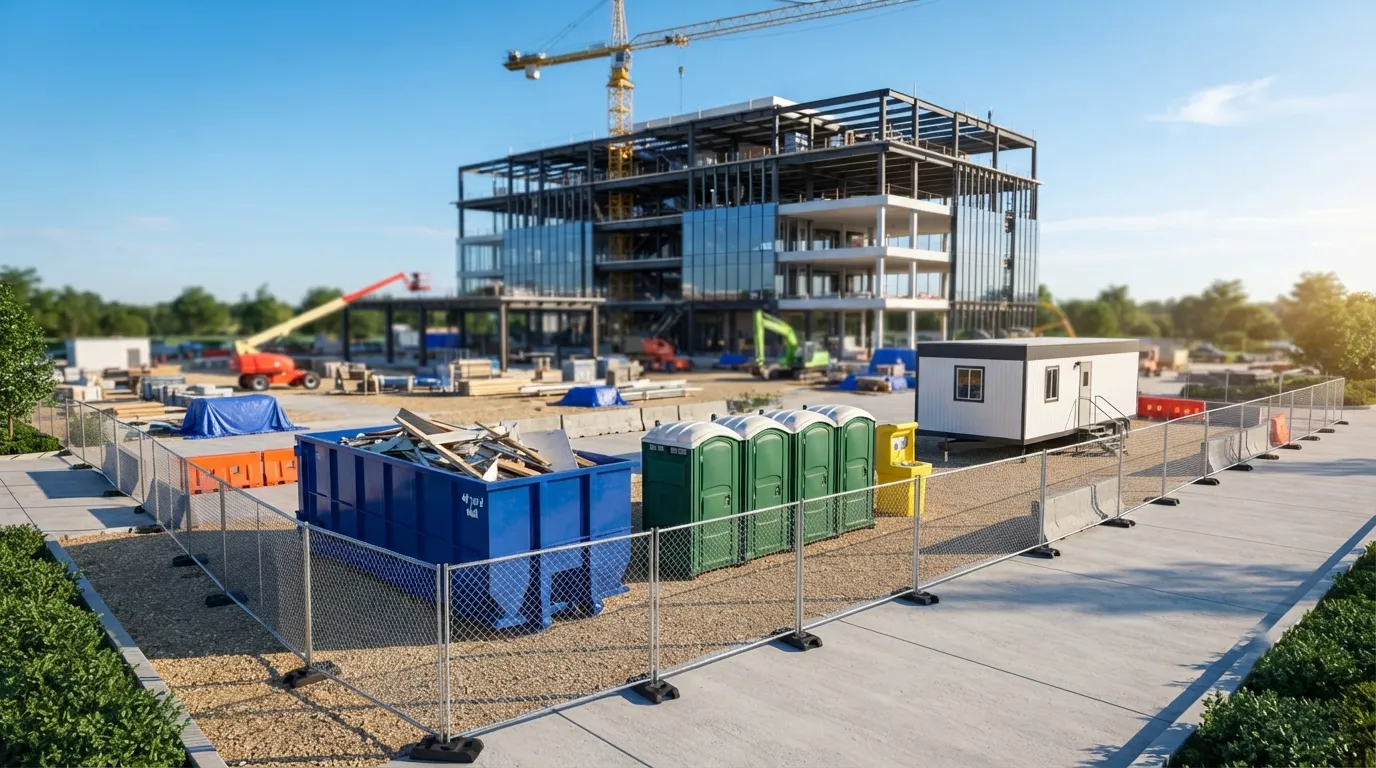
Start with the toilet math. OSHA 1926.51(c) sets the ratio: one unit for crews of 20 or fewer, and one toilet seat plus one urinal per 40 workers once you pass that number. A standard porta potty rental covers most crews, with a 60 to 70 gallon holding tank and a footprint of about 44 by 48 inches, so it fits on a job trailer pad without eating your laydown area. If your crew works with paints, coatings or solvents, OSHA 1926.51(f)(1) kicks in and washing facilities become mandatory, not optional. That is where a handwashing station rental or a portable sink rental earns its spot next to the toilets. Pair it with a roll-off dumpster rental for framing scrap and drywall, and you have covered the two things every Melbourne inspector actually asks about: sanitation and debris. Larger sites sometimes need a temporary fence rental around the perimeter too, especially near occupied buildings or public sidewalks downtown.
How Much Does Portable Toilet Rental for Construction Sites Cost?
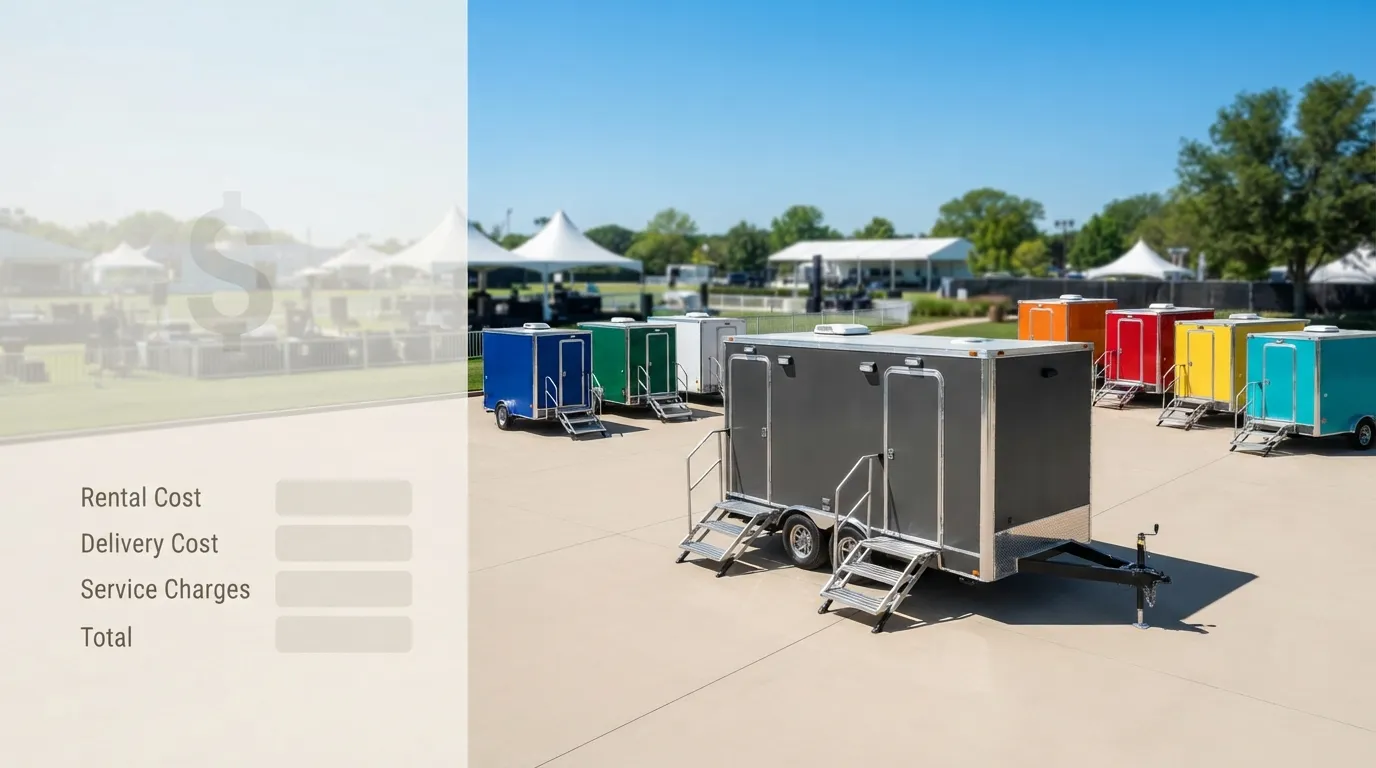
A standard unit runs a measured $100 to $350 a day depending on route and duration, with weekly and monthly rates dropping the per-day cost once you commit longer. Delivery adds a separate fee. Here is how the numbers typically break out for a Melbourne job:
| Item | Day | Week | Month |
|---|---|---|---|
| Standard toilet | $100 - $350 | $130 - $500 | $125 - $325 |
| Delivery fee | $100 - $150 | $150 - $200 | $172 - $420 |
| Roll-off dumpster | $51 - $112 | $426 - $778 | $500 - $500 |
Most contractors renting for a full build phase land on a monthly porta potty rental instead of paying day rates. If you are only pouring a slab or running a two-day punch list, check the porta potty rental per day page instead. For a full cost breakdown across unit types, the porta potty rental cost guide walks through it. Sites needing an accessible unit should budget separately using the ADA row on the ADA accessible porta potty page, since that unit prices differently than a standard.
Are OSHA Portable Toilet Requirements the Same Everywhere?
No, and this trips up crews moving between states. Federal OSHA 1926.51(c) sets the baseline ratio nationwide: one toilet per 20 workers, then a seat and urinal per 40 as headcount climbs, up to one per 50 at 200 or more workers. A crew running a construction portable toilet rental job in Melbourne follows this same federal standard. Cal/OSHA in California layers on its own state plan requirements on top of the federal rule, and Texas OSHA enforcement follows the federal standard directly since Texas has no state plan of its own. If your company operates crews in more than one state, do not assume the Florida ratio travels with you. Confirm which plan governs the jobsite before you order units. For general industry workplaces rather than construction, the ratio comes from 29 CFR 1910.141(c)(1)(i) instead, which uses a different table. Our OSHA portable toilet requirements page breaks down both tables side by side, and the how many porta potties do I need calculator turns your headcount into a unit count.
Do Construction Sites Need Anything Besides Toilets and a Dumpster?
Often yes. A jobsite with limited street parking or tight lot lines in Melbourne needs a temporary fence rental to keep the public off an active excavation, and OSHA 1926.202 governs barricades used for employee protection on top of that fencing. Night pours or early framing crews working before sunrise need lighting; a light tower rental covers that under the illumination standards in OSHA 1926.56(a). Sites without a permanent power drop lean on a temporary power pole, and OSHA 1926.404(b)(1)(ii) requires GFCI protection on that circuit. Crews doing renovation work near Indian Harbour Beach, 6.9 miles northeast of Melbourne, often add a storage container rental or a mobile office trailer rental to secure tools overnight instead of hauling them offsite daily. Debris that will not fit standard trash service goes in a dumpster sized correctly the first time; check dumpster sizes and dimensions before ordering, and review what cannot go in a dumpster so the load does not get rejected at the transfer station. Housekeeping under OSHA 1926.25 requires clearing debris regularly, not letting it pile up between hauls.
How many porta potties does a 20 person crew need?
One unit covers a crew of 20 or fewer under OSHA 1926.51(c). Once you cross 20 workers, you need a toilet seat and a urinal for every additional 40. Most residential jobs in Melbourne with a small framing crew never need more than one or two standard porta potty rental units on site at once.
Does a construction site need a handwashing station separate from the toilet?
Only in specific cases. OSHA 1926.51(f)(1) requires washing facilities when workers apply paints, coatings, herbicides or insecticides. Outside that, a unit with a built-in hand sanitizer dispenser often satisfies daily needs, though 29 CFR 1910.141(d)(2) requires soap and towels, not sanitizer alone, for general industry washing.
How long does a construction rental usually run?
Most job site rentals run by the month since builds stretch across weeks, not days. A monthly porta potty rental is priced lower per day than a short daily rental. Short punch-list jobs or one-day pours use the day rate instead, listed on the porta potty rental per day page.
Can I rent a dumpster and a toilet from the same company?
Yes, and most Melbourne contractors do exactly that to cut down on delivery coordination. Melbourne Porta Pros delivers roll-off dumpster rental units alongside toilets on the same truck route, and a roll-off needs about 60 feet of clear straight approach behind the truck for placement.
What happens if my crew size changes mid-project?
Call and adjust the order. A crew that grows past 20 workers crosses into the next ratio tier under OSHA 1926.51(c), so a second unit or an added seat and urinal becomes necessary. Melbourne Porta Pros swaps unit counts mid-rental without restarting the whole construction site services contract.
Next step
Get a delivery date
Tell us the address, the dates and the headcount. We size the order and confirm the route.