
How many restrooms does a farm crew need?
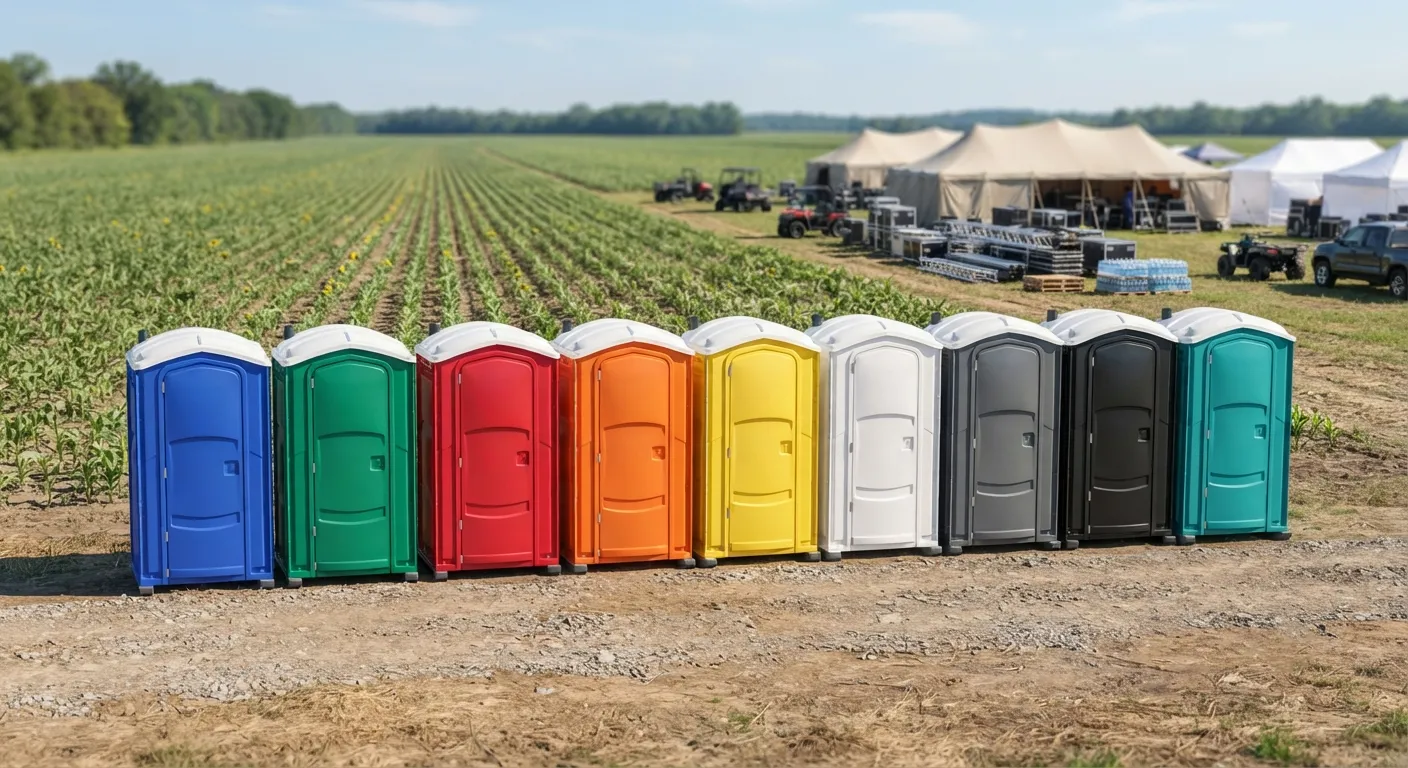
OSHA 1928.110 covers agricultural field sanitation directly: potable water, toilets and handwashing within a quarter mile of where hand-labor employees work, at a ratio of one facility per 20 employees. That is a tighter walking distance than most construction sites deal with, and it matters on a citrus grove or row-crop operation where workers spread out over acres. A standard porta potty rental covers most crews. If your operation runs bigger, ratio-based counts get complicated fast, and our how many porta potties do I need guide walks through the math. Melbourne growers with crews split across multiple fields often need two or three cluster points rather than one big bank of units near the barn. We place them where the tractors can still turn around, and we ask about ground conditions before we commit to a spot near irrigation lines. Each standard unit holds a 60 to 70 gallon tank, which keeps service visits reasonable even out past the paved road. If your crew works acreage further from Melbourne proper, driving distance matters for response time. West Melbourne sits 5.7 miles south, and Rockledge is 18.4 miles north, so we plan routes accordingly. For seasonal harvest work, a short-term porta potty rental per day often makes more sense than a monthly commitment. Longer growing seasons usually call for monthly porta potty rental instead, priced by the month rather than re-upped week to week.
What does farm restroom rental cost in Melbourne?
Pricing depends on how long you need units and how many. A standard unit runs from a day rate up through a full month, and multi-unit farm jobs usually land somewhere between the day and week columns depending on harvest length.
| unit | duration | typical price |
|---|---|---|
| standard | day | $150 |
| standard | week | $200 |
| standard | month | $200 |
| delivery_fee | day | $150 |
| service_fee | week | $60 |
Delivery fees cover the trip out to the field, which can run further than a typical in-town job. Weekly service keeps tanks from overflowing during peak harvest, and ANSI/PSAI Z4.3 sets the baseline service interval at once a week for up to 10 users over a 40 hour week, which is a reasonable planning number for a crew that size. Bigger crews need more frequent pumping or more units to spread the load. See full breakdowns on our porta potty rental cost page, and check emergency porta potty rental if a unit gets knocked over by equipment mid-season. Farms running packing operations alongside field labor sometimes need a restroom trailer rental for office staff, separate from the field units. If you are also managing debris from clearing or fencing work, a roll-off dumpster rental or construction dumpster rental can run alongside the restroom order.
Do farm restrooms need handwashing stations too?
Yes. OSHA 1928.110 requires handwashing right alongside toilets and potable water for hand-labor crews, not as an afterthought. A handwashing station rental placed next to the toilet units satisfies that pairing, and 29 CFR 1910.141(d)(2) requires soap and towels or a hand-drying device at any washing facility, not just sanitizer. Hand sanitizer alone does not meet that standard, which surprises some growers who assumed a pump bottle was enough. If your crew handles chemicals, sprays, or treated seed, OSHA 1926.51(f)(1) requires washing facilities specifically for employees applying paints, coatings, herbicides or insecticides, so pesticide-handling crews need washing access built into that part of the operation, not just general field sanitation. A portable sink rental works well near equipment sheds where hands get dirty between field passes. Melbourne farms running produce stands or agritourism events sometimes add a hand sanitizer station rental near customer parking as a supplement, not a replacement. For the full rundown on what is required versus what is optional, our handwashing requirements page breaks it down by work type. We deliver both toilets and wash stations on the same truck when scheduling allows, which saves a second trip out to the property and keeps setup simple for crews already stretched thin during planting or harvest.
How far in advance should I book for harvest season?
Book two to three weeks ahead if you can, since harvest timing clusters demand across every grower in Brevard County at once. Melbourne Porta Pros can often turn around faster for existing customers. Call early if your harvest window is weather-dependent.
Can units sit on unpaved ground near the fields?
Yes, standard units sit stable on packed dirt or gravel without a pad. We check the specific spot before delivery, since soft or sloped ground affects placement and truck access during service visits.
How often do units get serviced during a growing season?
Weekly is standard for crews under 10 people, per the ANSI/PSAI Z4.3 baseline interval. Larger crews or longer field distances often need twice-weekly service to keep tanks from filling before the next scheduled visit.
Do I need a separate unit for pesticide-handling workers?
Not always a separate toilet, but pesticide-handling crews need washing facilities under OSHA 1926.51(f)(1), specifically for people applying herbicides or insecticides. Pair a handwash station with existing units rather than adding a whole second restroom.
What if my property is outside Melbourne city limits?
We still cover it. Check our service areas page or contact us directly, and see porta potty rental in Melbourne for the core coverage zone before requesting a quote.
Next step
Get a delivery date
Tell us the address, the dates and the headcount. We size the order and confirm the route.