
How Many Porta Potties Do I Need for a Construction Site?
OSHA 1926.51(c) sets the baseline: 1 toilet facility for 20 workers or fewer, then 1 toilet seat and 1 urinal per 40 workers once you pass 20, dropping to 1 seat and 1 urinal per 50 workers at 200 or more. A 15-person framing crew in Melbourne needs one unit, full stop. A 60-person site sits in the "20 and up" bracket and needs two seats plus urinals to match. Once you're past 200 workers, the ratio eases because bigger crews spread bathroom breaks across shifts more evenly. Most construction site services in Melbourne start with a standard porta potty rental and add units as headcount climbs. If your foreman is also tracking temporary power pole needs or a light tower rental for early starts, fold the toilet count into that same site plan so delivery trucks aren't making separate trips. Crews doing paint, coatings, or pesticide work trigger a different rule: OSHA 1926.51(f)(1) requires washing facilities specifically for those contaminant exposures, which is separate from the general toilet count. Check OSHA Portable Toilet Requirements if you're bidding a job with mixed trades on site.
How Many Porta Potties Do I Need for an Event?
Events run on hours and drink service, not just headcount. A wedding reception for 100 guests over 5 hours behaves differently than a 3-day fair on the same field. Here's a rough guide for planning an event restroom rental in Melbourne:
| Guests | Duration | Units (no alcohol) | Units (with alcohol) |
|---|---|---|---|
| 50 | 4 hours | 1-2 | 2 |
| 100 | 4 hours | 2 | 3 |
| 150 | 4 hours | 3 | 4 |
| 250 | 6 hours | 4-5 | 6 |
| 500 | 8 hours | 8 | 10-12 |
Alcohol adds roughly 30 to 40 percent more usage because people drink more water alongside it and bladders empty faster. Multi-day events need servicing between days, not just more units up front; a festival restroom rental plan should budget for at least one service visit per day per cluster of units. For a backyard wedding restroom rental, one deluxe flushable porta potty often covers 50 guests better than two standard units, since guests wait less and the unit gets used more efficiently.
Worked Example: 150-Person Backyard Wedding
Say you've got 150 guests, a 5-hour reception, and an open bar starting at cocktail hour. Baseline from the event table lands you at 3 units for no alcohol at that headcount, but alcohol service pushes it to 4. Add one ADA-compliant unit per ADA Standards 213.2, which requires at least 5 percent of a cluster to be accessible whenever units are grouped, and never fewer than one. That's 5 units total: 4 standard, 1 ADA. An ADA accessible porta potty rental needs a 60 inch turning circle per ADA Standards 304.3.1 and a 32 inch clear door opening per ADA Standards 404.2.3, so give the placement crew room on the lawn, not tucked behind a tent pole. Pair the order with a handwashing station rental near the food table; 29 CFR 1910.141(d)(2) requires soap and towels at wash stations, and hand sanitizer alone doesn't satisfy that standard. Melbourne venues with grass or sand sites should also confirm placement access, since delivery trucks need clear ground, and ADA Standards 302.1 calls for stable, firm, slip-resistant surfacing under the unit itself.
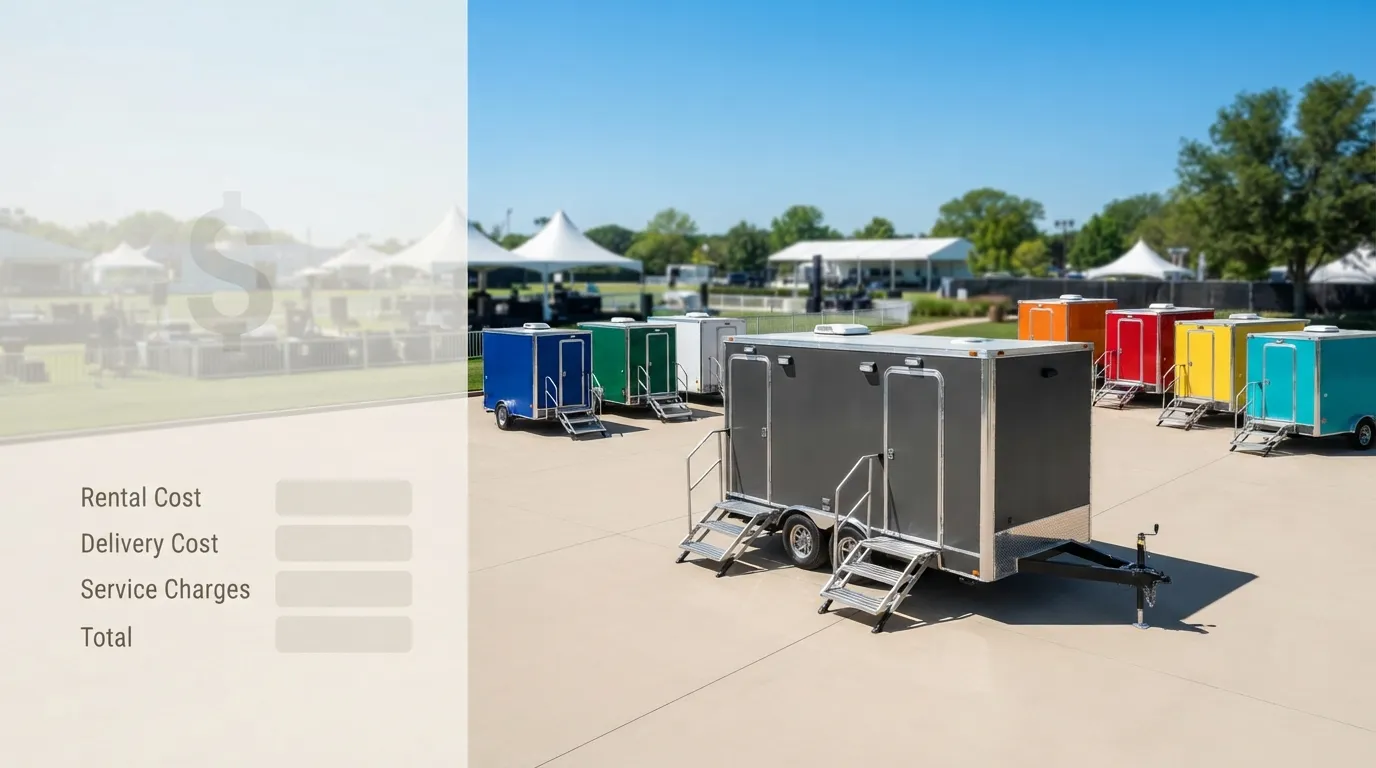
Worked Example: 60-Worker Construction Site
A 60-person framing and electrical crew falls into OSHA's "20 to 200" bracket, which calls for 1 toilet seat and 1 urinal per 40 workers. At 60 workers, that means 2 seats and 2 urinals, typically delivered as 2 standard units with urinal inserts. If the crew is running saw work and finish carpentry with no coatings involved, that's the full sanitation requirement; no washing facility trigger under 1926.51(f)(1) applies unless someone's spraying paint or applying pesticide-treated lumber. Electrical subs pulling GFCI-protected circuits under 1926.404(b)(1)(ii) don't change the toilet math, but do check with whoever's managing the temporary power pole so unit placement doesn't block panel access. A site this size in Melbourne usually orders weekly service rather than one-time delivery, since ANSI/PSAI Z4.3 sets a baseline of one service visit per week for up to 10 users across a 40-hour week, and 60 workers means servicing more often than that baseline implies.
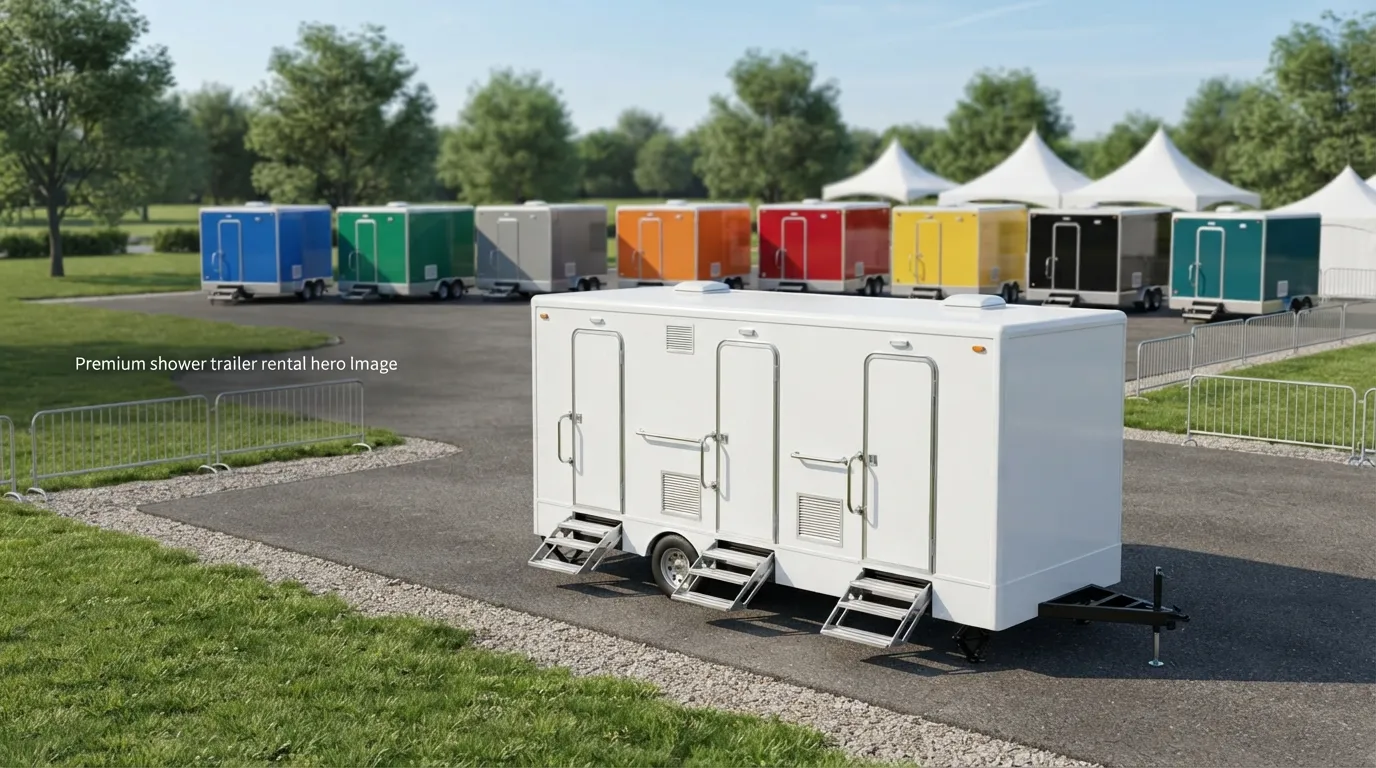
What If My Event Runs Multiple Days?
Multi-day events need a servicing plan, not just more units. A 3-day county fair with 500 daily visitors doesn't need triple the units from day one; it needs the same headcount math per day plus a pump-out and restock between each day's close and the next morning's open. Skipping that service visit is the single biggest reason units smell or run out of supplies by day two. For a county fair restrooms booking or a golf tournament restrooms package spanning a weekend, ask about weekend pricing directly, since a 2-day tournament often prices better as a weekend package than as two separate daily rentals. Farther out events, like a marathon restroom rental staged along a race route, need units placed at intervals rather than clustered, which changes delivery logistics more than headcount math.
Do I Need More Units If I'm Renting a Dumpster Too?
Not directly, but jobsite planning tends to bundle toilets, dumpsters, and fencing together, so it helps to size all three at once. A 10 yard dumpster rental answers how many feet a 10 yard dumpster runs at about 12 feet long, and holds roughly 10 cubic yards, or about 270 cubic feet as the answer to how many cubic feet are in a 10 yard dumpster, suited to a single-room renovation. A 20 yard dumpster rental is closer to 22 feet long, holds around 540 cubic feet, and typically carries 2 to 3 tons before hitting weight limits, which answers how many tons a 20 yard dumpster holds. A 30 yard dumpster rental stretches about 22 feet as well but with taller walls, holding near 810 cubic feet and answering how many tons a 30 yard dumpster can hold with up to roughly 4 tons depending on debris type. The 40 yard dumpster rental tops out around 1,080 cubic feet, the answer to how many cubic feet are in a 40 yard dumpster, and can carry close to 5 tons on a mixed-debris job, which covers how many tons a 40 yard dumpster holds. Check Dumpster Weight Limits before loading concrete or shingles, since those materials hit tonnage caps fast even in a large container. Every roll-off delivery needs about 60 feet of straight clearance behind the truck, so plan porta potty and fence placement around that clearance, not on top of it. If you're fencing the whole site, a temporary fence rental or chain link temporary fence should route around both the dumpster pad and the toilet cluster.
How Do I Know If I'm Under-Ordering?
Watch for lines forming past the first hour of an event, or workers walking more than a few minutes to reach a unit on a spread-out site. Both signal you're short. Melbourne's beachside venues and inland construction lots have different foot-traffic patterns, so what works for a compact downtown lot might fall short at a sprawling agricultural site; check Farm and Agricultural Restrooms for guidance suited to spread-out acreage, where OSHA 1928.110 requires field sanitation facilities within a quarter mile walk for hand-labor employees. If you're unsure which bracket your headcount falls into, Request a Quote and describe the job; getting the count right the first time avoids an emergency call mid-event. For same-day shortfalls, Emergency Porta Potty Rental covers gaps, but planning ahead with the Porta Potty Rental Checklist is cheaper and faster than a rush order.
How many porta potties do I need per 100 guests?
Plan on 2 units for 100 guests over a 4-hour event without alcohol, rising to 3 if you're serving drinks. Longer events or hot Melbourne afternoons push actual usage higher, so round up rather than down when guests will be standing outside most of the day.
How many tons does a 30 yard dumpster hold?
A 30 yard dumpster typically holds up to around 4 tons, depending on the debris type. Dense materials like concrete or roofing shingles hit weight limits well before the container fills visually, so check Dumpster Weight Limits before loading.
How many cubic feet are in a 20 yard dumpster?
A 20 yard dumpster holds roughly 540 cubic feet. It measures around 22 feet long, similar footprint to a 30 yard unit, but with shorter walls, so the volume difference comes from height rather than length or width.
How many porta potties does OSHA require on a job site?
OSHA 1926.51(c) requires 1 toilet for 20 workers or fewer, then 1 seat and 1 urinal per 40 workers up to 200, and 1 per 50 workers beyond that. The bracket you fall into depends on peak headcount on site, not average daily count.
Do I need an ADA unit at my event?
Yes, if you're clustering portable toilets. ADA Standards 213.2 requires at least 5 percent of a cluster to be ADA accessible, with a minimum of one unit regardless of cluster size, even for small backyard events in Melbourne.
How often do units need servicing during a multi-day event?
Plan on daily servicing for any event running more than one day. ANSI/PSAI Z4.3 sets a baseline of one weekly visit for light use, but daily foot traffic at a fair or tournament outpaces that baseline fast, so book service accordingly through Melbourne Porta Pros.
Next step
Get a delivery date
Tell us the address, the dates and the headcount. We size the order and confirm the route.